Cargo Insurance Icon: Essential Vector Assets
Visual communication in the logistics and finance sectors often struggles with a common hurdle: explaining complex protection policies without overwhelming the viewer. When designing for supply chain management, freight forwarding, or marine insurance, clarity is paramount. A well-crafted Cargo Insurance icon serves as an immediate visual anchor, bridging the gap between technical policy details and user understanding. Rather than relying on dense paragraphs to explain risk mitigation, a simple illustration can instantly convey safety, coverage, and security. For web designers, marketers, and business owners, having access to high-quality vector graphics for this specific niche is not just an aesthetic choice; it is a functional necessity for effective digital communication.
Defining the Visual Language of Protection
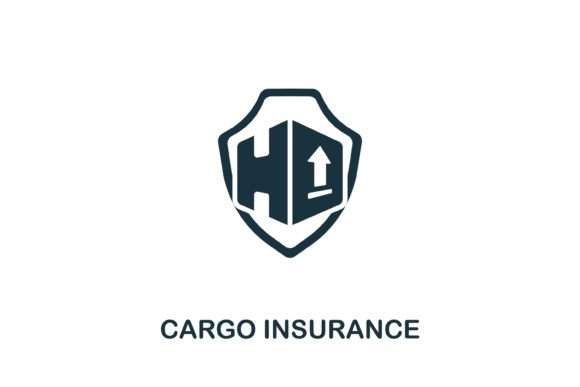
The Cargo Insurance icon is more than a decorative element; it is a semantic symbol that carries significant weight in commercial contexts. At its core, this graphic represents the financial safeguarding of goods during transit. However, the design must balance two distinct concepts: the movement of freight and the shield of insurance. Effective symbols in this category often combine imagery of shipping containers, crates, or vessels with universal signs of protection like shields, checkmarks, or umbrellas. This synthesis allows users to process the concept of "insured cargo" in milliseconds.
When you download a package containing both EPS and JPG files, you are securing versatility. The JPG serves as a quick preview or a ready-to-use asset for low-resolution environments, while the EPS file acts as the master source. This vector format is critical because logistics branding appears across vastly different scales. The same icon might need to function as a 16-pixel favicon on a tracking portal and as a large-format decal on a warehouse wall. Vector graphics ensure that lines remain crisp and edges stay sharp regardless of magnification, preserving professional integrity across all touchpoints.
Practical Applications Across Industries
The utility of a dedicated Cargo Insurance icon extends far beyond insurance provider websites. Professionals across various sectors utilize these assets to enhance clarity and engagement.
- Logistics Dashboards: Freight forwarders use these icons in status trackers to indicate which shipments are fully insured versus those pending coverage, reducing support tickets and customer anxiety.
- E-Commerce Checkout: Online retailers selling high-value items use simple illustrations at the point of sale to offer add-on shipping protection, increasing conversion rates through clear visual cues.
- Educational Materials: Trainers and educators in supply chain management rely on clean vector graphics to create infographics that teach students about Incoterms and liability transfer.
- Corporate Presentations: Sales teams pitching logistics services use consistent iconography to break up text-heavy slides, making proposals more digestible and visually appealing.
- Mobile Apps: Developers building fleet management tools need lightweight, scalable symbols that render perfectly on small screens without consuming excessive bandwidth.
In each of these scenarios, the icon acts as a cognitive shortcut. It reduces the mental load required to navigate complex information architectures, allowing users to focus on decision-making rather than deciphering text.
Technical Advantages of Editable Vector Files
One of the primary strengths of acquiring a premium Cargo Insurance icon set lies in the editability of the EPS file. Unlike raster images, vectors are mathematically defined, meaning every curve and line is adjustable. This is particularly valuable for branding consistency. If your company uses a specific shade of navy blue or requires a line weight that matches existing typography, an editable vector allows you to modify the icon to fit seamlessly into your design system. You are not locked into the designer’s original color palette or stroke width.
Furthermore, easy-to-edit vectors facilitate rapid prototyping. Marketing teams testing different landing page variations can quickly swap colors or simplify details to see what resonates best with their audience. This agility is essential in digital marketing, where speed and adaptability drive performance. The inclusion of a high-quality JPG alongside the EPS provides a fallback option for platforms that do not support vector uploads, ensuring you always have a usable asset at hand without needing to open Adobe Illustrator or CorelDRAW for minor tasks.
Enhancing User Experience and Trust
In the realm of cargo and freight, trust is the currency. Customers are entrusting valuable inventory to third parties, and any sign of unprofessionalism can trigger hesitation. Pixelated, generic, or mismatched clipart suggests a lack of attention to detail that clients may fear extends to the actual handling of their goods. Conversely, a polished, professionally designed Cargo Insurance icon signals competence and reliability.
From a UX perspective, these icons improve navigation efficiency. In long lists of services or policy documents, the eye scans for patterns. Consistent iconography creates a visual rhythm that guides the user through content. When a shipper is reviewing a quote and sees a familiar shield-and-box symbol next to a line item, they instantly recognize it as a protection cost without reading the description. This micro-interaction streamlines the user journey and reduces friction in the purchasing process.
Selecting the Right Style for Your Project
Not all Cargo Insurance icons are created equal, and choosing the right style depends heavily on your specific context. When evaluating assets, consider the following practical factors to ensure the graphic serves its intended purpose effectively.
- Visual Weight and Complexity: For mobile interfaces or small UI elements, opt for minimalist line art or flat designs. Intricate details will disappear at small sizes. Reserve detailed, dimensional illustrations for hero sections or print materials where there is ample space to appreciate the nuance.
- Cultural Neutrality: Logistics is a global industry. Ensure the icon uses universally recognized symbols for cargo and protection. Avoid region-specific truck styles or obscure maritime flags unless targeting a strictly local audience.
- Style Consistency: If integrating into an existing website or app, match the new icon to your current library. Mixing 3D renders with flat line icons creates visual dissonance. Look for packs that offer multiple variations within the same family to maintain cohesion.
- Licensing Clarity: Always verify the usage rights. Commercial projects require appropriate licensing to avoid legal complications. Premium assets typically offer broader commercial usage terms compared to free alternatives.
Optimizing Implementation for Web and Print
Once you have selected and customized your Cargo Insurance icon, proper implementation ensures maximum impact. For web use, consider converting EPS files to SVG format. SVGs retain the scalability of vectors but are natively supported by modern browsers and can be styled with CSS. This allows for interactive hover states or animation, adding a layer of engagement to static pages. Always include descriptive alt text for accessibility, ensuring screen reader users understand the icon's meaning.
For print applications, such as brochures, contracts, or vehicle signage, work directly from the EPS file to preserve resolution. Ensure color profiles match the output method—CMYK for physical printing and RGB for digital displays. Testing the icon at its final intended size before production prevents costly reprints. A symbol that looks perfect on a 27-inch monitor may be too thin to reproduce clearly on a business card. By respecting these technical boundaries, you ensure the asset performs reliably in the real world.
Ultimately, investing in a high-quality, editable Cargo Insurance icon is an investment in clearer communication. It transforms abstract policy concepts into tangible visual assurances, helping professionals connect with their audience more effectively. Whether you are building a comprehensive logistics platform or simply updating a presentation deck, the right vector graphic saves time, enhances professionalism, and delivers a better experience for everyone involved in the supply chain.