The Strategic Role of the Trucking Icon in Modern Digital Logistics Design
In the rapidly evolving landscape of digital communication, visual shorthand has become the primary language of business. For professionals operating within the logistics, transportation, and supply chain sectors, the Trucking Icon serves as far more than a decorative element; it is a critical functional asset that bridges the gap between complex industrial operations and user-friendly digital interfaces. As the global supply chain becomes increasingly digitized, the demand for high-quality, versatile vector graphics has surged. Creators, marketers, and web designers are recognizing that a well-crafted Trucking icon is essential for establishing immediate cognitive recognition in an attention-scarce economy.
The modern digital ecosystem requires assets that are not only aesthetically pleasing but also technically robust and contextually relevant. When we discuss the acquisition of a premium Trucking Icon package—complete with editable EPS and JPG files—we are discussing the foundational building blocks of brand trust and user experience. This article explores why this specific visual symbol has gained prominence, how it aligns with broader industry trends, and why possessing editable source files is a non-negotiable standard for today’s creative professionals.
Visual Semantics in the Logistics Economy
To understand the value of a professional Trucking Icon, one must first understand the shift in how logistics companies communicate. Historically, the trucking industry relied on physical signage and print media. Today, the primary touchpoints are mobile applications, SaaS dashboards, real-time tracking portals, and corporate infographics. In these environments, screen real estate is limited, and processing speed is paramount.
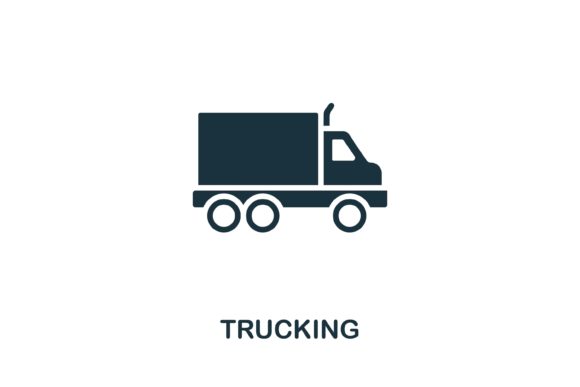
A simple illustration of a truck acts as a semantic anchor. When a user navigates a freight management platform, they do not have time to read labels to distinguish between "warehousing," "last-mile delivery," and "long-haul transport." A distinct Trucking icon communicates these concepts instantly. This reduction in cognitive load is directly tied to conversion rates and user satisfaction. For web designers and template creators, integrating a polished Trucking icon is not merely about filling space; it is about architecting an intuitive information hierarchy that guides the user toward their goal without friction.
The Shift Toward Minimalist Industrial Aesthetics
Current design trends favor minimalism, flat design, and geometric clarity. This aesthetic shift is particularly relevant for the transportation sector, which is actively trying to shed outdated perceptions of being low-tech or inefficient. A modern Trucking Icon reflects the precision, technology, and reliability of contemporary logistics networks. The simple illustration style mentioned in premium asset descriptions is a deliberate choice. It strips away unnecessary detail to focus on the silhouette and function, ensuring the graphic remains legible at 16 pixels on a favicon or scaled up for a billboard.
This trend intersects with the broader movement toward "corporate Memphis" and clean-line vector art, which dominates current tech and B2B marketing. By utilizing a Trucking icon that adheres to these modern standards, businesses signal that they are forward-thinking and digitally native. Conversely, using dated, overly detailed, or clip-art-style imagery can subconsciously signal operational obsolescence to potential clients and partners.
Technical Versatility: Why File Format Matters
For freelancers, agencies, and in-house creative teams, the utility of a graphic asset is defined by its editability. The specification of receiving both an EPS file and a JPG file addresses two distinct but equally important workflows. Understanding why this duality matters is key to maximizing the return on investment for any design resource.
The Power of the EPS Vector
The Encapsulated PostScript (EPS) format is the industry standard for vector graphics. Unlike raster images, vectors are mathematical constructs composed of paths rather than pixels. This makes the Trucking Icon infinitely scalable without any loss of quality. For a web designer creating a responsive site, this is crucial. The same asset must look crisp on a 4K monitor, a standard laptop screen, and a budget smartphone. Furthermore, the EPS file allows for deep customization. Brand colors can be adjusted via hex codes, line weights can be modified to match existing typography, and elements can be rearranged to fit unique layout constraints. This "easy to edit" capability transforms a generic stock asset into a bespoke brand element.
The Utility of High-Resolution JPG
While vectors are superior for design, the JPG format remains the universal language of digital sharing and quick implementation. Having a pre-rendered JPG version of the Trucking icon facilitates rapid prototyping, presentation decks, and social media content creation where vector support may be limited. It allows marketers and entrepreneurs to utilize the asset immediately without needing specialized software like Adobe Illustrator. This accessibility democratizes design, allowing non-designers within an organization to maintain visual consistency across internal documents and external communications.
Aligning with Broader Market and Consumer Trends
The rising interest in high-quality Trucking Icons is symptomatic of larger shifts in the global market. We are currently witnessing the "consumerization" of B2B logistics. End consumers now expect the same level of transparency and visual polish from their freight providers as they do from e-commerce giants like Amazon. This expectation forces traditional trucking companies to upgrade their digital presence.
Sustainability and Electric Fleets
As the transportation industry pivots toward green energy, the visual representation of trucking is changing. Marketers are increasingly seeking Trucking Icons that reflect electric vehicles, aerodynamic designs, and eco-friendly initiatives. A static library of diesel-era graphics no longer suffices. Access to editable vector files allows designers to modify existing icons to represent new vehicle technologies, supporting corporate sustainability narratives without commissioning entirely new illustrations from scratch.
Data Visualization and Infographics
The logistics industry is data-heavy. Stakeholders need to digest shipping volumes, route efficiencies, and carbon footprints quickly. Infographics have become the primary medium for translating this data into actionable insights. A cohesive set of Trucking Icons provides the visual vocabulary necessary for these infographics. When used effectively, these symbols break up dense text and create visual rhythm, making complex reports accessible to investors, clients, and regulatory bodies. The ability to use a consistent symbol system across annual reports, pitch decks, and web dashboards creates a unified brand narrative that reinforces professionalism.
Practical Applications for Creative Professionals
For the target audience of creators, entrepreneurs, and marketers, the application of these assets extends beyond simple website decoration. The versatility of a well-designed Trucking Icon supports a wide array of business functions:
- Web Design and UI Kits: Integrating consistent iconography into navigation menus, service pages, and checkout flows to improve usability and reduce bounce rates.
- Pitch Decks and Investor Relations: Using clean, professional symbols to visualize business models and market opportunities in startup presentations.
- Educational Content and Training: Creating visual aids for driver training manuals, safety protocols, and onboarding materials where language barriers may exist.
- Merchandise and Branding: Leveraging the scalability of EPS files to print high-quality decals, apparel, and vehicle wraps that reinforce brand identity in the physical world.
- Social Media Marketing: Developing recognizable visual hooks for LinkedIn posts, Instagram stories, and ad creatives that stop the scroll in crowded feeds.
The Future of Visual Communication in Transport
Looking forward, the role of the Trucking Icon will likely expand alongside emerging technologies. As augmented reality (AR) interfaces begin to overlay digital information onto physical warehouses and roadsides, standardized iconography will serve as the interface layer for human-machine interaction. Similarly, as autonomous trucking moves from testing to commercial deployment, the visual symbols representing these vehicles will need to convey safety, AI oversight, and reliability to a skeptical public.
Designers and businesses that invest in high-quality, editable assets today are positioning themselves to adapt to these future shifts. By securing source files rather than flattened images, they retain the agency to evolve their visual language as the industry transforms. The Trucking Icon is, therefore, not just a picture of a vehicle; it is a strategic tool for navigating the intersection of heavy industry and digital innovation.
Elevating Standards Through Quality Assets
Ultimately, the decision to utilize professional-grade graphics is a decision to respect the audience's time and intelligence. In a sector defined by efficiency, your visual communication should be equally efficient. A poorly executed or pixelated icon suggests a lack of attention to detail that can bleed over into perceptions of operational competence. Conversely, a sharp, well-integrated Trucking Icon signals that a company values precision, clarity, and modern standards.
For freelancers and agencies, providing clients with editable, high-fidelity assets demonstrates a commitment to long-term value. It empowers the client to maintain their brand integrity long after the initial project is complete. Whether you are building a comprehensive logistics SaaS platform, designing a brochure for a regional carrier, or creating an infographic about global trade routes, the right visual assets make the difference between noise and signal. By prioritizing format flexibility, aesthetic relevance, and semantic clarity, professionals can ensure that their work resonates in an increasingly competitive and visually sophisticated marketplace.